Sunday, November 26, 2006

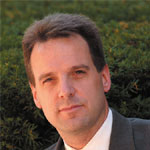
Stephen DeVoy


2002-2004

Stephen DeVoy became best known for reporting on John Poindexter “Information Awareness Office” of mass computerized data mining surveillance of the general public, turning its technologies against Poindexter, by posting some of Poindexter’s personal information.
Cyber citizen spies on a Pentagon spook

The man who heads the Pentagon's efforts to develop a computer program to keep an electronic eye out for terrorists is himself the object of scrutiny.

Although the John Poindexter Awareness Office was launched as a joke website on November 29 it has attracted thousands of hits and hundreds of responses.

"I would like to eliminate the surveillance of Americans from the war on terror equation," said Stephen DeVoy, the computer scientist who set up the Poindexter page as part of his site of disorganized resistance at http://www.breakyourchains.org

The site focuses on Poindexter, who is developing a program to sift through enormous amounts of individual data to detect patterns that could indicate terrorist activity. Visitors to the site are urged ... "if you see Mr Poindexter purchase something, travel somewhere or do, well, anything, send us a tip describing your observations."

And, while the site contains information on others who work with Poindexter, Mr DeVoy said he has received no reports on any of them.

Much of what he has received on Poindexter, a former national security adviser to president Ronald Reagan and convicted felon of the Iran-Contra scandal, has not been posted, Mr DeVoy said, because it appeared libellous or not legitimate.

Mr. Devoy, 40, a "rational anarchist," said he is self-employed and will not reveal where he lives because he has received death threats. He said the Government should not be involved in individuals' lives, and his site is an example of individual dissent against his country's tendency to spy on on its own citizens who do not conform.

http://www.smh.com.au/articles/2003/01/17/1042520778065.html

So where is his site?

So, I begin further internet research, and find such things as:
5. Break Your Chains! Someone is harassing myself and my family. They are engaging in cyber crimes to do so. My family has been through enough. I'm shutting this website down. http://www.breakyourchains.org/ - Last modified: 6 July 2004 @ 12:40

http://72.14.209.104/search?q=cache:McZ0OKFPwtEJ:www.bigsmoke.us/xbel/bookmarks/html/+BreakYourChains.org&hl=en&gl=us&ct=clnk&cd=10&client=firefox-a

Where did breakyourchains.org go? 19.10.2004 20:00

I am happy to see that Mr. DeVoy has contributed to an indymedia group. His work has been thorough and compelling on issues that matter to all of us interested in our liberties. I wish I could find that site. Any help would be appreciated.
Godspeed!
matthew e-mail:: clumsiii@hotmail.com

And so have others (check out its various "spins"):

Anarchist becomes subject of Federal Probe
by Keanu Hamilton Saturday, Mar. 06, 2004 at 6:17 PM

Boston anarchist becomes subject of Federal Probe

Stephen DeVoy, anarchist, subject of Federal Probe

Illegal merchandise sales, defamation of corporations, suspicion of domestic terrorism

By Gabriela Herrera
American Post Staff Writer
Sunday, March 7, 2004; Page A01

CAMBRIDGE, MA (Reuters) 13:30 - Stephen R. DeVoy, owner of websites at www.whiterosejournal.info, www.stop-fascism.org , www.breakyourchains.org, and www.rationalanarchism.org has become the subject of a Federal Probe in regard to illegal merchandise sales and sales tax evasion. In addition to Federal action, a civil lawsuit has been filed by the Austin-based corporation Cycorp, Inc. in connection to defamation and libel published on DeVoy's websites. Preliminary investigation reveals some substance to the investigation, authorities said.

Although Mr. DeVoy denies any wrongdoing, it has been proven beyond a reasonable doubt that there has been more than casual defamation of several companies and individuals. Telephone records as well as files subpoenaed from EarthLink Hosting, (Mr. DeVoy's web host), contain cached web pages containing the libel as well as names of individuals who have accused Mr. DeVoy of harassment and defamation. In early 2003, Mr. DeVoy fled Austin, Texas shortly after being sought in connection with a computer store robbery in a southern California establishment. Mr. DeVoy, an unemployed programmer began his harassment campaign after being terminated from Cycorp, Inc. due to lack of performance and excessive absenteeism. DeVoy was also suspected of stealing company secrets for possible sale to unknown foreign parties. After the firm became aware that Mr. DeVoy was involved in an anarchist movement responsible for domestic terrorist activities, his termination was hastened.

In addition to defamation charges, the Federal Probe will investigate Mr. DeVoy's bumper sticker sales and online merchandising campaign. According to the Internal Revenue Service records, Mr. DeVoy failed to report income coming from such sales as well as failing to provide a return policy for defective merchandise. One customer reported that upon requesting a refund for bumper stickers he did not receive, Mr. DeVoy blocked e-mail messages from the sender. The stickers reportedly faded within days of being placed on the bumper of the purchaser's vehicle. In other reports, Mr. DeVoy's stickers began to appear on police cruisers owned by the Cambridge Police Department. The campus authorities have reported incidences of being forced to remove them from vehicles and building facades as well.

Mr. DeVoy is known to be suffering from a mental condition known as Paranoid Personality Disorder, for which he takes medication and is required to see a therapist. The mental health facility which has been assigned to Mr. DeVoy has reported that he has failed to keep appointments.

Given Mr. DeVoy's criminal record as well as his inclusion in the Department of Homeland Security's list of potential domestic terrorists, it is possible that the Federal Bureau of Investigation will play the biggest role in the investigation.

American Post

add your comments

http://hawaii.indymedia.org/news/2004/03/4135_comment.php

Stephen DeVoy Never Has Been Indicted for Any Crime
by Observer Sunday, Jun. 11, 2006 at 1:25 PM

More than two years have past since this libelous article was published. Not only has DeVoy not been indicted, but he has never been arrested, tried, or even questioned about any of the accusations published in the article. Time proves that Stephen DeVoy was the target of a deliberate cyber stalking harassment campaign.

add your comments

http://hawaii.indymedia.org/news/2004/03/4135_comment.php


HAS STEPHEN DEVOY BEEN MURDERED BY THE GOVERNMENT?
Mon Jul 11, 2005 13:39
61.2.184.178
Concerned Group of Activists

WHERE IS STEPHEN DEVOY?

A group of us are trying to reach Stephen Devoy but his website is down and all other lines of communication have also been stopped.

We seriously wonder if he has been murdered by the Government because of a message that was sent below... and of course because he tried to fight them single-handedly regarding ELECTRO-MAGNETIC weapons.

They had to tread lightly and not cause too much of an uproar as everything he said was 100% TRUE apparently.

http://www.raven1.net
http://www.raven1.net/mendosa.htm

All the criminal government could do was send out a phony email from him to try to discredit him...

The post below is regarding Stephen DeVoy. Obviously this was posted by someone in the Bush administration... as the person is illiterate...

This persons 'fearless leader' WILL BE IMPEACHED shortly...
(hush, hush... don't let George know... he might O.D. on the antidepressents he's been shoving down his throat)

Anyway this is the POST REGARDING STEPHEN DEVOY that has us deeply worried!

IS STEPHEN ALIVE? OR HAS HE BEEN MURDERED BY THE GOVERNMENT TOO, LIKE SO MANY OTHER DISSIDENTS?

THIS IS THE POST:
..I hope you are feeling better..we will turn the power down on the impulse generator if you will just come outside and talk with us..SLOWLY approach the black Tahoe parked down the street..with your hands in sight at all times..when the agent in the passenger seat rolls down the window..say "I need to speak to Steve"..you will then be taken to an undisclosed location where Steve is waiting for you to join him..He is in a soundproof room lined with renyolds wrap..we have a tin foil helment in your size that will block all impulses into your brain..your mom is doing fine and likes her new room..she has adjusted well (as we're sure you will) to her new meds AND HAS AN UPBEAT OUTLOOK!!..you must get back to taking your vitamins..the agent in the Tahoe will have a fresh supply for you..Steve says "Hi"..Do not worry..everything will be fine..if you do not do as instructed your health will continue to deteriorate slowly..at 10:04 pm tonight blink your light on the patio twice to let us know you are ready to relocate and be with Steve..DO NOT speak to anyone about our plans..we will know if you do.

http://www.apfn.net/messageboard/07-13-05/discussion.cgi.68.html

I have found this later post, with his name; hopefully he is OK.

Ubiquitous NSA Telephone Call Logging: The Practical Significance
by Stephen DeVoy Friday, May. 12, 2006 at 7:52 PM

The significance of NSA spying.

Ubiquitous NSA Telephone Call Logging: The Practical Significance

Author: Stephen DeVoy

Recent revelations that the NSA is logging all telephone calls of all Americans, while blatantly illegally and outrageously anti-democratic, are far more significant than the media leads you to believe. These revelations are not really new. An earlier article made it clear that a defense contractor was being paid to build "a system to identify calling patterns between suspected terrorists." The new article states that the NSA "is using the data to analyze calling patterns in an effort to detect terrorist activity." Since it has now been revealed that the goal is to log and database ALL telephone calls between Americans and analyze them to detect terrorist activity, we can conclude that the Bush Administration considers ALL Americans to be terrorists.

According to act"Administration propaganda network" Fox News, the Almighty Decider Bush declared, "Our intelligence ivities strictly target Al Qaeda and their known affiliates. Al Qaeda is our enemy and we want to know their plans." Bush is telling the truth. You see, there is no Al-Qaeda, at least not in reality. "Al-Qaeda" is just a term the Almighty Decider uses to signify everyone who opposes Him. As Bush Himself said, on November 6, 2001, "You are either with us or against us." Since "Us" means Bush, and since nearly 80% of the American population opposes Bush, 80% of the American population is "Al-Qaeda." That means that nearly every American IS IN FACT a member of "Al-Qaeda" (at least in Bush's fantasy world). Bush, therefore, is telling it like it is (to Him) when he says that the new NSA program is targeting Al-Qaeda only (read 80% of Americans). And why is it important to monitor this "Al-Qaeda"? Well, to protect the other 20% from the 80%. Who would that 20% be? Well, it appears to me that that 20% would be the kernel of his fascist state which, for the most part, is comprised of the ruling class and men with low IQ's (and yes, a few women who like men with low IQ's).

That said, lets get to what this really means. Bush is targeting everyone who disagrees with him. What could he possible gain by having a database of the relationships between each American and every other American as well as the relationships between each American and every business? You must keep in mind that Bush wants this information so that it can be used to protect the 20% of Americans who now rule over the other 80%. That means, he needs this information to keep 80% of the population from doing what they could easily do without some means of restraining them (e.g. overthrow the state, arrest all members of the corrupt regime, put the criminals on trial, etc).

How can one restrain 80% of the population by maintaining a database of all relationships (and face it, nearly all relationships are discernable through identifying who telephones whom)? Isn't it obvious? If you still can't guess, let me spell it out for you: BLACKMAIL, HARASSMENT, THREATS, INDUCEMENT OF LOSS OF EMPLOYMENT, DISINFORMATION and so on. Basically, all of the things that dictatorships do to keep the masses from overthrowing the elite. Indeed, all Bush and his STASI need do is make an example out of everyone who speaks up. In short shrift, no one will speak up. Many of us know first hand that the Bush Regime has interfered in our lives already using the aforementioned list of black deeds. I could name a long list of online writers who have already experienced these black deeds and I would be on that list.

What the Almighty Decider is doing is a direct and major threat to your liberty, your happiness, your future, and everything you value in life. Do not take it sitting down.

Stephen DeVoy's internet store is at:
http://www.cafepress.com/stopfascism

So "cute" how the media ignores people as Stephen DeVoy, instead feeding us a fluff of things such as John Mark Karr. How about an interview by Larry King!

Is anyone in the government or the media looking out for the safety of blogs and of bloggers?

Missing or Blocked Anti-IAO Blogs

www.breakyourchains.org (Stephen DeVoy)
www.warblogging.com (George Paine)

In researching the “Information Awareness Office”, these blogs came up link lists as two of the largest sources of information, and were particularly prominent in turning some of the spying technology on John Poindexter in a late 2002 blogger response against Poindexter and IAO. They are described as having received a lot of attention with thousands of blog site hits (clicks) from government officials.

Yet the links don't work; break your chains comes back as an unrelated site, and warblogging just continues to time out; though I am able to access a Google cache date September 2006, its link to donate goes to a deactivated or blocked Paypal account that states that "this recipient is currently unable to receive money."

Saturday, November 25, 2006

IAO People

Missing Web Pages from the Information Awareness Office (IAO) Web site

The above Web pages were removed from the IAO Web site on Nov. 26, 2002. They were retrieved from the Google cache on Dec. 2, 2002.

http://www.thememoryhole.org/policestate/iao-bios.htm

I have repeated some of them here as part of history.


John M. Poindexter

Education

Ph.D., Physics, California Institute of Technology, 1964

M.S., Physics, California Institute of Technology, 1961

B.S., Engineering, U.S. Naval Academy, 1958

Experience Summary

Brings a unique blend of experience to problems from the highest levels of government to the laboratory. Demonstrated exceptional management and command ability ranging from naval operations to the national security of the United States. Noted for creative solutions to difficult issues and ability to quickly grasp the essence of new tasks. Goal oriented.

Professional Background

DARPA Information Awareness Office, Director

2002 - Present

The mission of the Information Awareness Office (IAO) is to imagine, develop, apply, integrate, demonstrate and transition information technologies, components, and prototype closed-loop information systems that will counter asymmetric threats (most notably, terrorist threats) by achieving total information awareness: enabling preemption; national security warning; and, national security decision making.

SYNTEK Technologies, Senior Vice President

1996 - 2002

SYNTEK is a small high technology firm with contracts in domestic and international defense and commercial business. Poindexter was responsible for high-level advice on management and direction of information systems projects (for example Defense Advanced Research Project Agency's Project Genoa).

TP Systems, Inc., Co-founder

1990 - 1996

TP Systems was a software development firm specializing in commercial software for the IBM PC's and compatibles. Poindexter was the chief designer and programmer. Development included a symbolic debugger for multi-tasking environments, a BBS communications program plus numerous utility programs.

Elkins Group, Consultant

1993 - 1996

Elkins was a business alliance with Electronic Data Systems (EDS), has developed Elkins Interactive Training Network (EITN), a satellite based training delivery system that has world-wide marketing potential. Poindexter was the Chairman of the Maritime Advisory Committee and a member of the Board of Directors. He also provided advice on strategic planning.

Presearch, Inc., Senior Scientist

1988 - 1989

Presearch had primarily been involved with defense studies and analysis. Faced with anticipated defense budget reductions, Poindexter joined the firm to develop new commercial enterprises. He designed and developed hardware and software for the prototype of a digital real-time, imaging system to be used for physical security of high value facilities. It was used to obtain a contract for nuclear power plant security system.

The White House

National Security Advisor
1985 - 1986

Dep. National Security Advisor
1983 - 1985

Military Assistant
1981 - 1983

Joining President Reagan's White House staff in 1981, Poindexter was responsible for reviewing and improving the command and management systems to support The President in national security crisis management. Under Poindexter's leadership a new high technology crisis management center and secure video teleconferencing system were conceived, developed and created which greatly enhanced The President's ability in this vital area. As Deputy National Security Advisor, he was responsible for leading and managing the National Security Council Staff and was Chairman of the Crisis Pre-planning Group. As National Security Advisor, Vice Admiral Poindexter was responsible for providing recommendations to The President on national security, foreign policy and defense policy. He was directly involved in implementing The President's policies on a strong defense, freedom and democracy around the world, human rights, world hunger, economic and military assistance, combating terrorism and arms control.

Major events in which he played a significant role included: Strategic Defense Initiative, Grenada Rescue Operation, Achille Lauro incident, Libyan Operation to respond to terrorist attacks. Reykjavik Summit with Soviets, peaceful transition of government in the Philippines, support for the democratic resistance in Nicaragua, and an attempt to begin rationalization of U.S. relationship with strategically important Iran.

U.S. Navy, Numerous Positions

1958- 1987

As Deputy Commander Naval Education and Training Command, amongst his duties of commanding the U.S. Navy's extensive education and training programs, he initiated a project to develop a distributed data base management system for more efficient management of the training pipelines. When Commander of a destroyer squadron, he was Surface Warfare and ASW commander of battle groups in the Western Pacific and Indian Ocean and developed new tactics and battle management procedures under the Composite Warfare Commander concept. As Commanding Officer of a cruiser he pioneered the shipboard use of computers to manage the ship's force portion of yard overhauls. He has been an Executive Officer and a Chief Engineer of destroyers.

Significant staff assignments included: Executive Assistant to the Chief of Naval Operations, Administrative Assistant to the Secretary of the Navy and Special Assistant for Systems Analysis to the Secretary of Defense.

California Institute of Technology, Laboratory Assistant

1961-1964

Conducted laboratory research to further develop a model for understanding the Mossbauer Effect with Nobel Laureate Rudolph Mossbauer.

Dr. Robert L. Popp (Ph.D. Electrical Engineering '97)

Dr. Popp is Deputy Director of the DARPA Information Awareness Office, Arlington, VA. He is responsible for assisting the IAO Director in the oversight of programs and monitors the capabilities of existing and proposed information systems in the problem domains of the office to meet enhanced future threats and to identify and exploit advanced technologies offering potential solutions to deficiencies. He previously was Assistant Deputy Under Secretary of Defense, Advanced Systems & Concepts; Principal Scientist, Program Manager and Director of Business Development with ALPHATECH; and Senior Scientist and Program Manager with Bolt, Beranek and Newman (BBN). He has published more than 60 journal and conference technical papers and holds two U.S. patents.

Robert L. Popp

Deputy Director, Information Awareness Office

Education

Dr. Popp received his B.A. and M.A. degrees in computer science (summa cum laude, Phi Beta Kappa, distinction) from Boston University, and his Ph.D. degree in electrical engineering from the University of Connecticut.

Professional Background

Background Information

Dr. Popp has broad knowledge and expertise in military systems, IT, and a technical foundation that spans acoustic and radar signal processing, multi-sensor multi-target tracking, sensor data fusion, systems and software engineering, computer networking and data communications, security, parallel and distributed computing, and hardware design.

DARPA Information Awareness Office, Deputy Director

Dr. Popp is responsible for assisting the IAO Director in the oversight of programs and monitors the capabilities of existing and proposed information systems in the problem domains of the office to meet enhanced future threats and to identify and exploit advanced technologies offering potential solutions to deficiencies. Other responsibilities include assisting in the management of over $200 million of DoD RDT&E funds annually; oversight and analysis of solicited and unsolicited proposals submitted by other government agencies, private industry, and academia; and guidance to program managers in the translation of technical proposals into workable financial and management plans.

OSD (AT&L), Assistant Deputy Under Secretary of Defense, Advanced Systems & Concepts

Dr. Popp was responsible for the oversight of a portfolio of Advanced Concept Technology Demonstration (ACTD)

programs totaling over $600M in total value primarily focused on information operations, homeland security, critical infrastructure protection, security, and C4ISR. He also supported OSD (AT&L) projects to improve joint and coalition interoperability and to improve the transition of science and technology to acquisition and fielding.

ALPHATECH, Principal Scientist, Program Manager, and Director of Business Development

Dr. Popp managed and oversaw numerous ISR-related R&D and technology transition programs in airborne radar sensor data fusion and exploitation for situational awareness and precision engagement of ground moving targets.

BBN, Senior Scientist and Program Manager

Dr. Popp managed and oversaw several Navy- and DARPA-sponsored efforts in operational maritime undersea surveillance, anti-submarine warfare (ASW), network performance monitoring, and automated hardware design using FPGAs, hardware description languages and genetic programming techniques.

University of Connecticut, Adjunct Professor, Computer Science and Engineering (CS&E) Department

Dr. Popp lectured Computer Networking & Data Communications undergraduate course, emphasizing network protocols and architecture, LAN/MAN/WAN technologies, routing, internetworks, and UNIX client/server programming. He also lectured Digital Logic Design undergraduate course, emphasizing fundamentals in Boolean algebra, combinational and sequential logic, and LSI/MSI integrated circuit (IC) design.

Air Force Research Laboratory (AFRL), Visiting Research Scientist, Advanced Concepts Directorate

Dr. Popp developed parallel and distributed algorithms and software for several military/civilian air traffic surveillance problems. Implementations were in C/C++ and included multi-threaded shared-memory parallelizations for general-purpose

SUN multiprocessors and distributed-memory parallelizations for an Intel Paragon HPC.

Military Service

U.S. Air Force, Griffiss AFB, NY, Staff Sergeant (E-5) / Aircraft Maintenance Technician

Served on active duty in the 49th Fighter Interceptor Squadron and 416th Bomb Wing. Duties included flight-line and phase-dock aircraft maintenance for F106 fighters and B52 bombers. Honorable Discharge, AF Commendation Medal, Good Conduct Medal, Longevity Service Ribbon, Small Arms Expert Marksmanship.

Professional Affiliations

Dr. Popp is currently serving as the Associate Editor for the IEEE Transactions on Systems, Man, and Cybernetics (SMC), as Chairman of the IEEE SMC Society's Adaptive Computing Systems technical committee, and has chaired numerous IEEE conference sessions in high performance computing, aerospace systems, and information operations. He has published 3 book chapters, over 60 journal and conference technical papers, and is the holder of two patents.

http://www.computerbytesman.com/tia/poppbio.htm

Robert Popp, Ph.D.


Title: Deputy Office Director
Biography:

Dr. Robert Popp is presently serving as the Deputy Director of the Information Exploitation Office (IXO) at the Defense Advanced Research Projects Agency (DARPA). In this capacity, Dr. Popp assists the IXO Director in guiding and directing a portfolio of R&D programs focused on sensing, exploitation and C4ISR to improve US military capabilities in combat operations. Dr. Popp is also spearheading an R&D thrust focused on a range of post-Cold War era strategic threats and problems, with particular emphasis on Pre- and Post-Conflict Stability Operations (P2COP).

Dr. Popp previously served as a Special Assistant to the DARPA Director for Strategic Matters, and earlier as the Acting and Deputy Director of the Information Awareness Office (IAO). At IAO, Dr. Popp guided and directed a portfolio of R&D programs focused on a variety of information technology solutions for counter-terrorism, foreign intelligence and other national security concerns. Among those programs was the Terrorism Information Awareness (TIA) program.

Prior to DARPA, Dr. Popp served as an Assistant Deputy Under Secretary of Defense for Advanced Systems and Concepts (AS&C) within the Office of the Secretary of Defense (OSD). Dr. Popp directed and oversaw a number of Advanced Concept Technology Demonstration (ACTD) programs focused on cyber security, information operations, homeland defense, and command and control.

Before joining the government, Dr. Popp was a Senior Scientist and Program Manager with two defense contracting firms, BBN and ALPHATECH. Dr. Popp served as a principal investigator on numerous R&D programs focused on multi-sensor multi-target tracking and localization, automatic target recognition, anti-submarine warfare (ASW), and adaptive computing.

Dr. Popp has served as an Adjunct Professor of Computer Science at the University of Connecticut, and as a Visiting Research Scientist with the Air Force Research Labs. Dr. Popp has also served in the military-six years of active duty service in the US Air Force as an aircraft maintenance technician of B52 bombers and F106 fighters, and three years in the Air National Guard as a welder on F15 fighters. Prior to his military service, Dr. Popp was a welder on Trident nuclear submarines.

Dr. Popp received his B.A. and M.A. degrees in computer science from Boston University, and his Ph.D. degree in electrical engineering from the University of Connecticut. Dr. Popp has authored three book chapters, over seventy journal and conference papers, and is the holder of two patents. Dr. Popp presently serves as the Associate Editor for both the IEEE Transactions on Systems, Man and Cybernetics, and the Journal of Advances in Information Fusion. Dr. Popp is a member of the ACM, AAAS, senior member of the IEEE, and a lifetime member of HOG-Harley Owners Group.

Contact Information:
Robert Popp, Ph.D.
DARPA / IXO
3701 Fairfax Drive
Arlington, VA 22203-1714

http://dtsn.darpa.mil/ixodarpatech/ixo_FeatureDetail.asp?id=32


Thomas P. Armour (no photo available)

Mr. Armour is Program Manager for Project Genoa II, a new program in the Information Awareness office of the Defense Advanced Research Projects Agency (DARPA). Prior to returning to DARPA in January 2002 to take on this assignment, Mr. Armour was Chief Technology Officer at Creative Technology Incorporated of Herndon, Virginia.

Before retiring from US Government Service in December 2000, he had been detailed to the Information Systems Office of the Defense Advanced Research Projects Agency as a Program Manager.

Prior to this assignment, Mr. Armour had been an Intelligence Officer at the Central Intelligence Agency since 1975. His last assignment at CIA was Senior Technology Officer for the Directorate of Intelligence, responsible for helping the Directorate think strategically about the impact of technology on its business. Mr. Armour served as Chief of Information Technology for the DCI's Nonproliferation Center.

Prior to this assignment, Mr. Armour was on the staff of CIA's Deputy Director for Science and Technology where he was involved in the Directorate's strategic planning process and conducted ad hoc studies for the Deputy Director. Mr. Armour has had a number of analytic and managerial assignments in CIA's Directorate of Intelligence involving foreign strategic missiles, the proliferation of missile technology worldwide, and Soviet naval weapons systems and strategic command and control, low-observable programs, cruise missiles, and antiballistic missile systems. He served as chief of the Directorate's computing and methodological support group, which had responsibility for applying computing and methodological tools to intelligence analysis. The group was involved in the full range of computing activities from direct end-user support through the design, development, and procurement of large ADP systems. Mr. Armour also has served in staff positions within the Office of Scientific and Weapons Research with collection and arms control support responsibilities and was Executive Assistant to the Deputy and Associate Deputy Directors for Intelligence. Prior to his CIA employment, Mr. Armour was a navigator in the United States Air Force, where he flew combat missions on the AC-119K gunship in Vietnam and worldwide airlift missions on the C-141A aircraft. He is married and has a son born in 1975 and is a private pilot with PP-SE:-IA ratings.

Education:

ß MBA, Southern Illinois University, 1975.
ß Master of Electrical Engineering, Cornell University, 1971.
ß Bachelor of Science, Cornell University, 1970,
Electrical Engineering, with distinction

Dr. Michael Foster (no photo available)

Program Manager: FutureMap
Dr. Michael Foster manages the FutureMAP program in IAO and the QuIST program in IPTO. Prior to Dr. Foster's assignment at DARPA, he was Program Director and Division Director, Experimental and Integrative Activities, for the National Science Foundation (NSF). From 1984 to 1988, Dr. Foster served on the faculty at Columbia University. Dr. Foster holds the Ph.D. degree in Computer Science from Carnegie-Mellon University and an SB in Mathematics from MIT.

Information Awareness Office Projects


IAO Programs
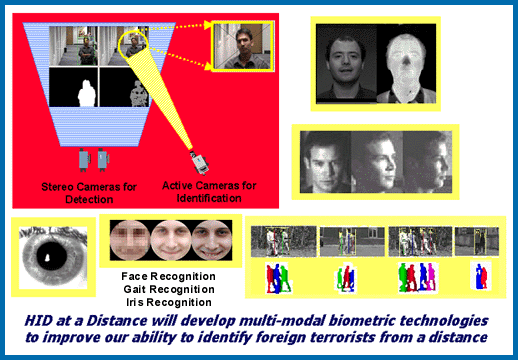
Human ID at a Distance (HumanID)

For use with surveillance camera – such as the dome cameras that began appearing everywhere in mid 2006.


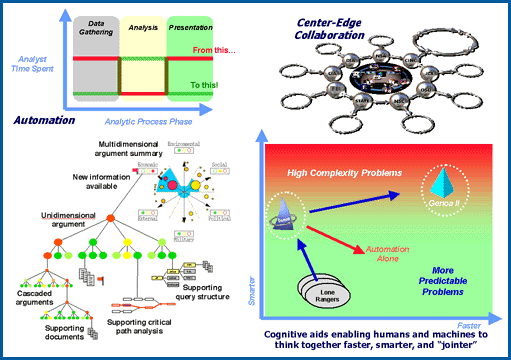
Genoa II


This would be used with analyzing “trees” of associations from such things as phone calls.

Genisys


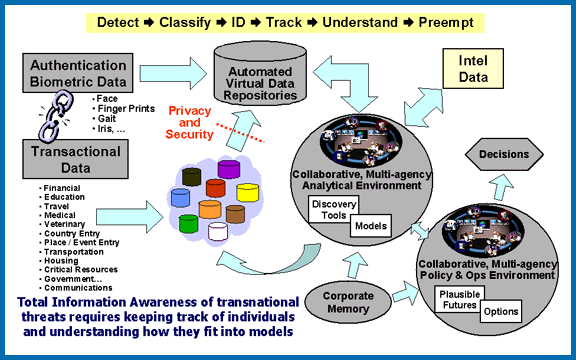
Total Information Awareness (TIA) System


This is the schematic for the government collecting and analyzing together a person’s records.

Friday, November 24, 2006

Total Information Awareness Ready Before 9/11

http://propagandamatrix.com/articles/december2004/061204tiaready.htm
Citizens For Legitimate Government | December 6 2004
Citizens For Legitimate Government can report today an exclusive story about the Total Information Awareness program (TIA), initiated by Admiral (retired) John Poindexter. CLG exclusive source tells us that a day after 9-11, Poindexter’s office of the TIA program was already established in the Pentagon. Says inside, unnamed source, Poindexter had the TIA program ready to roll out on 9/12/2001, the day after 9-11. Five days after 9-11, the TIA office was fully functional. Asked if that means the program was ready to rollout previous to 9/11, the source familiar with the program and privy to top-secret government contractors said, "of course."
The Total Information Awareness Program that was headed by Poindexter was disassembled after Congress decided against it, rightly asserting that it constituted an invasion of citizen privacy. TIA chief, Admiral John Poindexter, resigned August 29, 2003, amidst controversy over TIA as well as the revelation of a DARPA program that would have allowed investors to bet on assassinations and terror attacks.

However, the CLG's exclusive inside source familiar with program says that as is the case with all ghosts, they never really go away. The TIA program, headed by Poindexter, has been completely reassembled under an intelligence agency of the US government, operating under the same terms as intended by Poindexter. No longer called TIA, the new code name for the project is "Basketball." Under the name "Basketball," that is, TIA has bounced to a new office and is still collecting information about Americans.

http://www.legitgov.org/exclusive_tia_basketball_120204.html

http://www.legitgov.org/index.html

Wednesday, November 22, 2006

Knowledge is Power: IAO DARPA

Information Awareness Office
Scientia Est Potentia
Knowledge is Power
U.S. Defense Advanced Research Projects Agency
It is difficult to counter the threat that terrorists pose. Currently, terrorists are able to move freely throughout the world, to hide when necessary, to find unpunished sponsorship and support, to operate in small, independent cells, and to strike infrequently, exploiting weapons of mass effects and media response to influence governments. This low-intensity/low-density form of warfare has an information signature, albeit not one that our intelligence infrastructure and other government agencies are optimized to detect. In all cases, terrorists have left detectable clues that are generally found after an attack. Even if we could find these clues faster and more easily, our counter-terrorism defenses are spread throughout many different agencies and organizations at the national, state, and local level. To fight terrorism, we need to create a new intelligence infrastructure to allow these agencies to share information and collaborate effectively, and new information technology aimed at exposing terrorists and their activities and support systems. This is a tremendously difficult problem, because terrorists understand how vulnerable they are and seek to hide their specific plans and capabilities. The key to fighting terrorism is information. Elements of the solution include gathering a much broader array of data than we do currently, discovering information from elements of the data, creating models of hypotheses, and analyzing these models in a collaborative environment to determine the most probable current or future scenario. DARPA has sponsored research in some of these technology areas, but additional research and development is warranted to accelerate, integrate, broaden, and automate current approaches.

http://infowar.net/tia/www.darpa.mil/iao/index.htm

Here’s what The New Yorker and The New York Times said back in 2002 about the U.S. Department of Homeland Security’s data matrix infrastructure:
The Information Awareness Office plays it so weird that one can't help suspecting that somebody on its staff might be putting us on. The Information Awareness Office's official seal features an occult pyramid topped with mystic all-seeing eye, like the one on the dollar bill. Its official motto is "Scientia Est Potentia," which doesn't mean "science has a lot of potential." It means "knowledge is power." And its official mission is to "imagine, develop, apply, integrate, demonstrate and transition information technologies, components and prototype, closed-loop, information systems that will counter asymmetric threats by achieving total information awareness."

The phrase "total information awareness" is creepy enough to merit a place alongside "USA Patriot Act" and "Department of Homeland Security," but it is not the Information Awareness Office's only gift to the language. The "example technologies" which the Office intends to develop include "entity extraction from natural language text," "biologically inspired algorithms for agent control," and "truth maintenance." One of the Office's thirteen subdivisions, the Human Identification at a Distance (HumanID) program, is letting contracts not only for "Face Recognition" and "Iris Recognition" but also for "Gait Recognition." (Tony Blair has pledged the full coöperation of the Ministry of Silly Walks.) Another of the thirteen, FutureMap, "will concentrate on market-based techniques for avoiding surprise and predicting future events"—a sounder approach, ideologically, than regulation-based liberal soothsaying.

The Information Awareness Office is working on some really cool stuff that will eventually turn up at Brookstone and the Sharper Image, like a Palm Pilot-size PDA that does instantaneous English-Arabic and English-Chinese translations. But the Office's main assignment is, basically, to turn everything in cyberspace about everybody—tax records, driver's-license applications, travel records, bank records, raw F.B.I. files, telephone records, credit-card records, shopping-mall security-camera videotapes, medical records, every e-mail anybody ever sent—into a single, humongous, multi-googolplexibyte database that electronic robots will mine for patterns of information suggestive of terrorist activity. Dr. Strangelove's vision—"a chikentic gomplex of gumbyuders"—is at last coming into its own.

It's easy to ridicule this—fun, too, and fun is something the war on terrorism doesn't offer a lot of—but it's not so easy to dismiss the possibility that the project, nutty as it sounds, might actually be of significant help in uncovering terrorist networks. The problem is that it would also be of significant help in uncovering just about everything, including the last vestiges of individual and family privacy. This is why William Safire wrote the other day that the program should simply be shut down, as was Attorney General Ashcroft's Terrorism Information and Prevention System, which was going to enlist postal workers and the like as amateur spies.

At a minimum, a temporary shutdown, pending some sort of congressional review and the creation of safeguards, would seem to be in order…

http://www.newyorker.com/talk/content/articles/021209ta_talk_hertzberg?021209ta_talk_hertzberg">http://www.newyorker.com/talk/content/articles/021209ta_talk_hertzberg?021209ta_talk_hertzberg

You Are a Suspect

WILLIAM SAFIRE
November 14, 2002
If the Homeland Security Act is not amended before passage, here is what will happen to you: Every purchase you make with a credit card, every magazine subscription you buy and medical prescription you fill, every Web site you visit and e-mail you send or receive, every academic grade you receive, every bank deposit you make, every trip you book and every event you attend — all these transactions and communications will go into what the Defense Department describes as "a virtual, centralized grand database."
To this computerized dossier on your private life from commercial sources, add every piece of information that government has about you — passport application, driver's license and bridge toll records, judicial and divorce records, complaints from nosy neighbors to the F.B.I., your lifetime paper trail plus the latest hidden camera surveillance — and you have the supersnoop's dream: a "Total Information Awareness" about every U.S. citizen.

http://www.nytimes.com/2002/11/14/opinion/14SAFI.html?ex=1164344400&en=d09c57baa1330737&ei=5070

Mission

The IAO's stated mission is to gather as much information as possible about everyone in a centralized location for easy perusal by the United States government, including Internet activity, credit card purchase histories, airline ticket purchases, car rentals, medical records, educational transcripts, driver's licenses, utility bills, tax returns, and any other available data. In essence, the goal of the IAO is to be able to recreate a life history of thoughts and movements for any individual on the planet on demand, which the Bush administration deems necessary to counter the threat of terrorism. Critics claim the very existence of the IAO completely disregards the concept of individual privacy and liberties and is far too invasive and prone to abuse.

http://www.sourcewatch.org/index.php?title=Total_Information_Awareness


Since, this entity was supposedly disbanded.

Tuesday, November 14, 2006

Media Silence on USHS Threats to Free Speech


I notified dozens of contacts about this story, yet ... nothing.

I have no idea if Katie Couric was forwarded anything, but since she does do a "free speech" segment, covering the story of the South Capitol Mall Blogger, and other such stories, would be a logical way to boast her ratings.

Hint to Couric, report the news on U.S. Department of Homeland Security Threat to Free Speech.

Wednesday, November 08, 2006

Benjamin Franklin and Free Speech

Benjamin Franklin

From: http://www.halexandria.org/dward766.htm

New Page -- 6 September 2003

Benjamin Franklin was a babe magnet. This may not be the most noteworthy of his many talents, but then again, it might be. Of all the signers of the Declaration of Independence, it's nice to know that the crafty dodger was sufficiently cognizant of the feminine mystique to gain notoriety for being highly attractive to members of the female sex. It speaks well of any male politician to genuinely like women. It's the old, "Make love, not war" style innovation.

The standard accolades for Benjamin are things like "America's best scientist, inventor, diplomat, humorist and business strategist." [1] Yada, yada, yada. Perhaps Monsieur Franklin did indeed accomplish much. But then again, maybe he was just in the right spot at the right time. The more relevant question is what was his philosophy, what was his ideals and aversions, and most significantly, how did he manage to attract all those babes?

Walter Isaacson [1] does a commendable job in answering some of these questions, and organizes it around 7 virtues attributed to Franklin. These include:

bullet

1 -- An Aversion to Tyranny (So relevant today)

bullet

2 -- A Free Press (and by implication, a couple of hundred years later, Inter Net)

bullet

3 -- Humor (It's the babe thing.)

bullet

4 -- Humility

bullet

5 -- Idealism in Foreign Policy

bullet

6 -- Compromise

bullet

7 -- Tolerance

bullet

8 -- Babes (I added this)

bullet

9 -- 1776 (this too)

1 -- Franklin wrote prolifically in the pen name guise of a slightly prudish widow named Silence Dogood. [You've got to admire his choice of pen names!] In one instance, "she" wrote, "I am a mortal enemy to arbitrary government and unlimited power." [1]

This is the kind of succinct statement which can be mined extensively for meaning and value. From mortal enemy to arbitrary government, Dogood makes it clear upon which side she stands. "I am naturally very jealous for the rights and liberties of my country; and the least appearance of an encroachment on those invaluable privileges is apt to make my blood boil exceedingly." [1] Go get 'em, Silence!

According to Isaacson [1], Franklin also uses Mrs. Dogood "to attack the theocratic rule of the Puritan establishment and the link between the church and state that was then the very foundation of Massachusetts government." She goes on to say, for example, "A man compounded of law and gospel is able to cheat a whole country with his religion and then destroy them under color of law."

William Rehnquist -- currently the Chief Justice of the U. S. Supreme Court -- said, "The separation of church and state was 'a misleading metaphor based on bad history," and thereafter advocated that "the framers of the Constitution intended merely to forbid the establishment of an official state religion, as exists in England." Obviously he was unfamiliar with Benjamin Franklin and Ben's part in writing the Constitution for the United States. But then again, Willy Rehnquist seems unfamiliar with the Constitution itself and the liberties which it advocates.

This constitutional familiarity can be a common problem as the former Attorney General of the United States, failed Senator John Ashcroft, ignored the basis on which is oath of office was made, and routinely mixed "law and gospel" "under color of law" on a regular and unfortunately consistent basis. It is precisely these people and others like them which Benjamin Franklin would quite possibly consider to be mortal enemies. They are certainly mortal enemies of freedom loving Americans, and their continuing presence constitutes just one of the Perils of Democracy.

Benjamin Franklin's most relevant quote for the current age was also what became "an American rallying cry back in the early days of the Republic: 'Those who would give up essential liberty to purchase a little temporary safety deserve neither liberty nor safety'." [1] The current morass of the USA (anti) Patriot Act and the infliction upon America of the Homeland InSecurity Department makes this question of liberty and security the most important issue in the United States and the world today. It is John Ashcroft and his co-conspirators which are most likely the moral enemies of liberty, security, and most anything worthwhile.

On the other side of the coin, however, Ben's "Aversion to Tyranny" makes him someone worthy of emulation, especially in the current State of the Union.

2 -- Franklin early on decided that the surest guard against tyranny was free expression -- including specifically the free flow of ideas and a free press. According to him "No tyrannical society can long exist when it cannot control the flow of information." One wonders what he would have thought of the Inter Net, and today's damming [pardon the pun] Media. [No flow of information, get it?]

The free wheeling Inter Net might easily have delighted Benjamin Franklin. Certainly, he was not one to shy away from offending anyone, and believed that "when Truth and Error have fair play, the former is always an overmatch for the latter." [1] He might have been concerned, however, at the constant barrage of worms, hackers, computer viruses -- and the inevitable knee-jerk reaction of control freaks to limit the Inter Net. He would probably suspect that within the "security needs of cyberspace" lie the seeds of liberty-denying shrubs. [pardon the pun... think about it!]

As Isaacson notes, "America's democracy learned that it could thrive in an atmosphere of unrestrained, even intemperate, free expression. Indeed, its democracy was built on a foundation of unbridled free speech. In the centuries since then, the nations that have thrived, economically and politically, have been those, like America, that are most comfortable with the cacophony, and even occasional messiness, that comes from robust discourse." That pretty well describes the Inter Net, and its true greatness. Ben would have liked it.

3 -- Franklin also led the way for such descendants as Mark Twain and Will Rogers with a wry and self-deprecating homespun character. Quotes such as, "I have likewise a natural inclination to observe and reprove the faults of others, at which I have an excellent faculty", is a style wholly within the Art of Writing unto itself.

Humor (and/or laughter) is the essence of wisdom. It's also an essential ingredient in the babe magnet thing. A sense of humor displays to all that the possessor maintains a delightful confidence in the past, present and future; and inasmuch as confidence is one of the most attractive of all interpersonal attributes, it follows that humor is the most necessary of all attributes. It also follows that the terribly serious and concerned folk are about as attractive as a rogue T-Rex in heat on a bad-hair day.

Franklin's observation, "Early to bed, early to rise, makes a man healthy, wealthy and wise," may not sound terribly humorous, but it did motivate Groucho Marx to reply that the statement was a lot of hoopla. "Most wealthy people I know like to sleep late, and will fire the help if they are disturbed before three in the afternoon." Now, that's funny!

4 -- Humility is a tough road to hoe, particularly when one is so incredibly brilliant, witty, handsome, and genteel. [BTW, arrogance is the illusion of being superior. If one really is superior, then it's not arrogance.]

Franklin considered humility to be something worth acquiring, even if only a life long attempt in his case. "Even if I could conceive that I had completely overcome it [pride], I would probably be proud of my humility." [1] Obviously, this is a good example of humor and humility, in that admitting to it displays a degree of humility. But this is also one which Benjamin could not claim personally, as he would then be proud of the statement. [This humility is really a multi-edged sword. There's really no escaping it!]

On the other hand, Franklin noted [1], "People will eventually give you the credit... if you don't try to claim it at the time. 'The present little sacrifice of your vanity will afterwards be amply repaid'."

5 -- It has been said (by historian Bernard Bailyn) that, "America's great historical moments have occurred when realism and idealism have been combined, and no one knew this better than Franklin." [1] Franklin employed this understanding as the official American envoy to Paris during the Revolutionary War. He both courted the cold calculating French Foreign Minister with crass mercantile interests, and appealed to the idealism of the French public in the potential brilliance of America and its goal of providing an alternative to tyranny the world over.

This tactic of combining realism and idealism is fairly common -- including the idea of going to war with Iraq in order to free the people from tyranny (idealism), but also to obtain exclusive access to a whole lot of oil (realism)! The difference, however, between the current state of the world and Franklin's was that Franklin was able to pull it off with a degree of credibility. No one believes the democracy argument with respect to Iraq, if only because of the serious lack of credibility of those making the argument.

The curious part is that for anything to work in any age, there must be a compromise between realism and idealism -- and thus the sixth virtue.

6 -- Compromise. "For Franklin, who personally believed in proportional representation, compromise was not only a practical approach but a moral one. Tolerance, humility and a respect for others required it. The near perfect document [the Constitution] that arose from his compromise [to include both representation on the basis of population and statehood] could not have been approved if the hall had contained only crusaders who stood on unwavering principle. Compromisers may not make great heroes, but they do make great democracies." [1] [emphasis added]

(6/20/05) Franklin, while working with Jefferson and Adams on the Declaration of Independence, rewrote Jefferson's phrase "We hold these turths to be sacred and undeniable..." as "We hold these truths to be self-evident." Walter Isaacson [4] wrote: "Our rights derive from nature and are secured 'by the consent of the governed', Franklin felt, not by the dictates or dogmas of any particular religion." But with Adams input, Franklin was willing to compromise and accept, "that they are endowed by their Creator with certain unalienable rights."

Tolerance, humility and respect for others... There is implied in this phrase the idea that perhaps, just perhaps, one does not know everything or that one is not singularly blessed with divine guidance in all things. [Obviously, if I'm right all the time, then everyone else must be wrong, at least part of the time!]

It is thus compromise on the basis of tolerance for other's opinions that lead us to...

7 -- Tolerance. Isaacson [1] makes the statement: "The great struggle of the 21st century will be between the forces of fanatic fundamentalism and those of tolerance." Not quite.

The greatest struggles -- at least those with the greatest sound and fury (and probably signifying nothing) -- will be those between different sects of fanatic fundamentalism. The lynch pin in such conflicts will be the compromising forces of tolerance.

The dramas on the world stage currently are in reality between the fanatic fundamentalisms of Shiite and Sunni Muslims, Orthodox Jewry, Christian-at-whatever-cost administrations, and all those who would misuse religion in order to control, manipulate, and deceive any and everyone else. When one realizes that the basis of the problems in the breakup of Yugoslavia into Bosnia, et al, was the centuries old conflict of Muslims and Christians of different sects, remembrances of battles hundreds of years prior, and the use of religion as a wedge so one person could steal another person's land. One can readily see that it is not quite enough to solve problems by waiting patiently until the current generation croaks. Sometimes, the religious bigotry lives on, and thus, it is essential to preach tolerance.

As Franklin has said, "I think vital religion has always suffered when orthodoxy is more regarded than virtue." The relevant factor is that all major religions have within their purview a Golden Rule in which it is delineated that one should do unto others what one would like others to do unto them -- or words to that effect. Tolerance, therefore, sees the fundamental connecting links between religions, while orthodoxy sees only the elaborate rules which attempt to distinguish one sect from another.

8 -- Babes. One of Franklin's favorite lines was, "If you ladies have any questions, the answer is 'yes'." [2] Willingness is the mother of invention. Or something like that. But if a "paunchy, balding, bifocaled septuagenarian managed to get French ladies in a flutter," [3], then you have to sit up and take notice of his advice. Keep in mind that many of the women who surrounded Benjamin, were young, attractive, and intelligent. If the only one of these three assets Franklin could claim was intelligence, then his sage advice is worth heeding.

It should be note, in addition that Franklin did master the "amorous friendship" of intimacy expressed in teasing kisses, tender embraces, intimate conversations, flowing love letters, and a hesitation toward sexual congress. Any such a talent can carry someone a long ways. There is the hint of a man who truly appreciated and respected women -- an attribute which can be very attractive to any female. It is admittedly short of Sacred Orgasm, but it's based on the same principle.

9 -- Then there's "1776", the musical. See it. No kidding. It's Benjamin at his best.

__________________________

[1] Walter Isaacson, "Citizen Ben's 7 Great Virtues", Time Magazine, July 7, 2003.

[2] Joel Stein, "All About the Benjamin", Time Magazine, July 7, 2003.

[3] Claude-Anne Lopez, "Why He Was a Babe Magnet", Time Magazine, July 7, 2003.

[4] Walter Isaacson, "God of Our Fathers", Time Magazine, July 5, 2004.

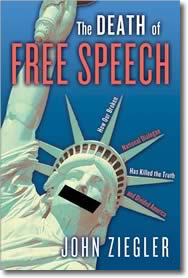
The Death of Free Speech

THE DEATH OF FREE SPEECH
How Our Broken National Dialogue Has Killed the Truth and Divided America

by John Ziegler

In The Death of Free Speech, radio talk-show host and TV commentator John Ziegler examines how the news media has created arbitrary, biased, and illogical rules for determining what can and cannot be said in the public arena. He details how in almost every major case of “speech and punishment” in modern America, the guilty verdict was wrong and unjust.

From incidents involving Jimmy “the Greek,” Trent Lott, and Fuzzy Zoeller to Rush Limbaugh, John Rocker, and Jocelyn Elders, he blows apart the conventional wisdom that led to these public figures being unfairly penalized for expressing their constitutionally protected opinions and explains why others have been spared despite making similar statements. Through his own experiences of being fired for things he has said on-air, as well as never-beforerevealed interactions with others who found themselves the target of the self-appointed “thought police” in the news media, Ziegler takes an in-depth look at the issues that surround these controversies. Ziegler also looks at the increasing corporate conflicts and legal restrictions being imposed on free speech, particularly when it comes to political speech, which came to the forefront of the 2004 election campaign in the battle over the candidates’ Vietnam War records. He scathingly obliterates the news media’s pathetic handling of that issue and describes how it affected the election itself. And he exposes how restrictions on free speech have created a media matrix that makes it impossible for the truth to ever be known by most Americans.

The Death of Free Speech is an objective, credible, provocative, and entertaining look at one of the most important and underreported realities in American society. No one is in better position to tell this story than John Ziegler as he warns that this most cherished constitutional right is in grave jeopardy.

JOHN ZIEGLER is a veteran of the radio and television industries who has been on the air in several major markets including Raleigh, Nashville, Philadelphia, Louisville, and Los Angeles, where he currently is the host of the evening show on the most listened to talk-radio station in the country. He has frequently served as a commentator on local and national television shows and as a columnist for numerous newspapers and prominent political Web sites. He lives in Burbank, California.

$24.95, HARDCOVER
ISBN: 1-58182-441-6

http://www.cumberlandhouse.com/spring2005/deathoffreespeech.asp

Cumberland House Publishing
Celebrating 10 years of Publishing Excellence: 1996-2006

Timeline: A History of Free Speech

David Smith and Luc Torres
Sunday February 5, 2006
The Observer

http://observer.guardian.co.uk/focus/story/0,,1702539,00.html

The following correction was printed in the Observer's For the record column, Sunday February 10 2006

We were muddled to say in the article below that 'the First Amendment of the US Bill of Rights guarantees four freedoms: of religion, speech, the press and the right to assemble'. The first 10 amendments to the US Constitution are collectively known as the Bill of Rights, and there are five, not four, freedoms guaranteed by the First Amendment, the fifth being the right 'to petition the government for a redress of grievances'.


399BC Socrates speaks to jury at his trial: 'If you offered to let me off this time on condition I am not any longer to speak my mind... I should say to you, "Men of Athens, I shall obey the Gods rather than you."'

1215 Magna Carta, wrung from the unwilling King John by his rebellious barons, is signed. It will later be regarded as the cornerstone of liberty in England.

1516 The Education of a Christian Prince by Erasmus. 'In a free state, tongues too should be free.'

1633 Galileo Galilei hauled before the Inquisition after claiming the sun does not revolve around the earth.

1644 'Areopagitica', a pamphlet by the poet John Milton, argues against restrictions of freedom of the press. 'He who destroys a good book, kills reason itself.'

1689 Bill of Rights grants 'freedom of speech in Parliament' after James II is overthrown and William and Mary installed as co-rulers.

1770 Voltaire writes in a letter: 'Monsieur l'abbé, I detest what you write, but I would give my life to make it possible for you to continue to write.'

1789 'The Declaration of the Rights of Man', a fundamental document of the French Revolution, provides for freedom of speech .

1791 The First Amend-ment of the US Bill of Rights guarantees four freedoms: of religion, speech, the press and the right to assemble.

1859 'On Liberty', an essay by the philosopher John Stuart Mill, argues for toleration and individuality. 'If any opinion is compelled to silence, that opinion may, for aught we can certainly know, be true. To deny this is to assume our own infallibility.'

1859 On the Origin of Species, by Charles Darwin, expounds the theory of natural selection. TH Huxley publicly defends Darwin against religious fundamentalists.

1929 Justice Oliver Wendell Holmes, of the US Supreme Court, outlines his belief in free speech: 'The principle of free thought is not free thought for those who agree with us but freedom for the thought we hate.'

1948 The Universal Declaration of Human Rights is adopted virtually unanimously by the UN General Assembly. It urges member nations to promote human, civil, economic and social rights, including freedom of expression and religion.

1958 Two Concepts of Liberty, by Isaiah Berlin, identifies negative liberty as an absence or lack of impediments, obstacles or coercion, as distinct from positive liberty (self-mastery and the presence of conditions for freedom).

1960 After a trial at Old Bailey, Penguin wins the right to publish D H Lawrence's sexually explicit novel, Lady Chatterley's Lover.

1962 One Day In the Life of Ivan Denisovich by Aleksandr Solzhenitsyn describes life in a labour camp during Stalin's era. Solzhenitsyn is exiled in 1974.

1989 Iranian leader Ayatollah Khomeini issues a fatwa against Salman Rushdie over the 'blasphemous' content of his novel, The Satanic Verses. The fatwa is lifted in 1998.

1992 In Manufacturing Consent, Noam Chomsky points out: 'Goebbels was in favour of free speech for views he liked. So was Stalin. If you're in favour of free speech, then you're in favour of freedom of speech precisely for views you despise.'

2001 In the wake of 9/11, the Patriot Act gives the US government new powers to investigate individuals suspected of being a threat, raising fears for civil liberties.

2002 Nigerian journalist Isioma Daniel incenses Muslims by writing about the Prophet Mohammed and Miss World, provoking riots which leave more than 200 dead.

2004 Dutch film maker Theo van Gogh is killed after release of his movie about violence against women in Islamic societies.

2005 The Serious Organised Crime and Police Act bans protest without permit within 1km of the British Parliament.

Related articles

03.02.2006: Jack Straw praises UK media's 'sensitivity' over cartoons
03.02.2006: Norwegian editor apologises
03.02.2006: Jordanian editor sacked over cartoons
03.02.2006: Danish paper regrets publishing cartoons
03.02.2006: UK press hold back in cartoon row
03.02.2006: What the papers say
03.02.2006: European elite scrambles to defuse furore
02.02.2006: BBC joins cartoon controversy
02.02.2006: Spectator makes cartoon U-turn
02.02.2006: Cartoons published in Jordan
02.02.2006: Palestinian gunmen in cartoons protest
01.02.2006: Bomb threat to repentant Danish paper
01.02.2006: Cartoon row spreads across Europe
31.01.2006: Danish paper sorry for Muhammad cartoons
Read the apology
30.01.2006: Danish paper sparks angry protests

Comment
03.02.2006: Leader: Cartoons and their context
03.02.2006: Sarah Joseph: The freedom that hurts us
02.02.2006: Prophetic fallacy
03.02.2006: Letters: Muhammad and the limits of free speech

MediaGuardian.co.uk special report
Race and the media