Showing posts with label criminal law enforcement. Show all posts

Wednesday, August 30, 2017

About What Happened To Me In 2006-2007

Spotlighting the 'breadcrumb' indicators of political dynamics hidden in plain sight
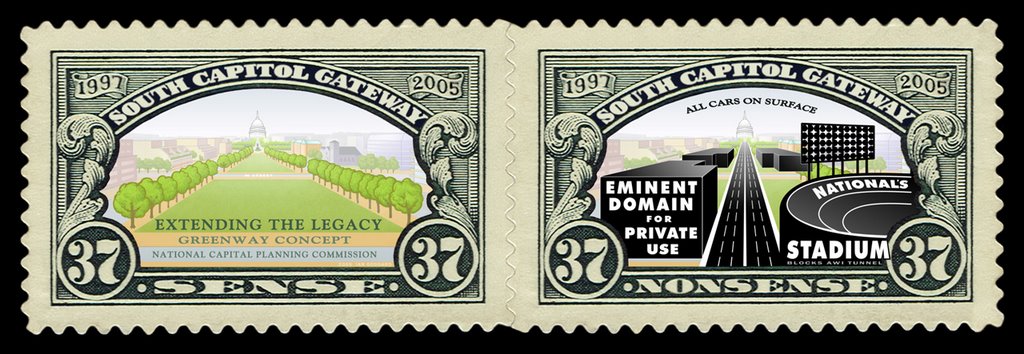
via blogging about the abortion of the U.S. National Capital Planning Commission's 
proposed for Washington, D.C. Extending the Legacy  South Capitol Mall
see: http://southmallblogger.blogspot.com/2017/08/about-what-happened-to-me-in-2006-2007.html

and: http://wwwsouthcapitolstreet.blogspot.com/2006/07/physical-reality-only-structure-along_22.html

Looking south:


Looking north:


photos by Douglas A. Willinger, February 2017
also see:

http://wwwfreespeechbeneathushs.blogspot.com/2006/10/roman-catholic-church-as-largest.html

http://wwwfreespeechbeneathushs.blogspot.com/2006/10/

Sunday, January 18, 2009

Criminal Police Disable Video

As happened with the criminal commonwealth of Virginia's criminal assault upon me in 2006, police in Prince Georges County Maryland cover up their criminal behavior by disabling the police video- even as the US Supreme Court excuses police 'blunders' designed to subvert the Constitution.

From the The Agitator:

Did the Cameras Go on Strike?

Sunday, January 18th, 2009

A jury has found that officers with the Prince George’s County, Maryland (where else?) police department used excessive force when they apprehended and arrested a TV reporter who was investigating possible improper use of public resources. I don’t know the much about the case other than what’s in the article, and from the article, it sound like the jury got it right–too much force, though the decision to puller her over may not have been out of bounds.

But it’s the last sentence of the article I found particularly interesting:

In all, nine police cars from Prince George’s and Cheverly responded. Although most of the squad cars were equipped with video cameras, police said none of them were working that day, Pavsner said.

So “most” squad cars in PG County have video cameras. Yet at the scene of a controversial arrest, with nine cars at the scene, not a single squad car camera was “working that day?”

Thursday, January 15, 2009

U.S. SC to allow 'Barney Fife' 4th Amendment Subversion

From The Washington Post:

Papist members vote to subvert 4th Amendment
http://www.washingtonpost.com/wp-dyn/content/article/2009/01/14/AR2009011401409.html?hpid=moreheadlines

[excerpt]

Chief Justice John Roberts, writing for the court, said the evidence may be used "when police mistakes are the result of negligence such as that described here, rather than systemic error or reckless disregard of constitutional requirements."

He was joined by Justices Antonin Scalia, Anthony M. Kennedy, Clarence Thomas and Samuel A. Alito Jr.
So, as with such subversive police tactics as the [criminal-apostate] Commonwealth of Virginia's excuse that the police video was "just grey static", record keeping 'blunders' may be used to subvert the U.S. Constitution's 4th Amendment protections against politically motivated searches.

In this case, the defendant-victim was given a 27 month prison sentence for "crimes" that the statutes violate the Constitution (drug and gun possession).

Decisions as this show where these Supreme Court 'justices' loyalities lay.

U.S. President Bush and Chief Justice Roberts with Cardinal Archbiship McCarrick


Cardinal Egan: 'My We Knows'

And a few links courtesy of Drug War Rant:

A number of people have been writing about Herring v. United States -- yet another incursion into the already decimated Fourth Amendment.

Friday, May 30, 2008

Thug Police Commits Crime Against Cameraman

Here's an example of where the U.S. is heading.


Felony assault?
Malicious Destruction of Property?

The U.S. appears to have a very low standard for its police.

Sunday, April 13, 2008

GW Bush White House 'Micromanaged' Crime

The GW Bush Administration 'micromanaged' criminal torture.

Perhaps they also so micromanaged unlawful surveillance of dissidents to subvert the 1st amendment?
Top Bush aides oversaw torture sessions 11 Apr 2008

According to an ABC report, top Bush aides, including Condi Rice, micromanaged the torture of terrorist suspects from the White House basement. Discussions on torture were so detailed, that some interrogation sessions were virtually choreographed by a White House advisory group, The torture advisory group included then-national security adviser Condoleezza Rice, then-defense secretary Donald Rumsfeld, then-secretary of state Colin Powell, then-CIA director George Tenet and then-attorney general John Ashcroft and Vice President [sic] Dick Cheney ABC's sources said.
GW Bush- the U.S.'s '1st Catholic President

Saturday, April 05, 2008

Pentagon To Promote Subverting the 1st Amendment Against Independent Blog[ger]s

http://prorev.com/2008/04/pentagon-study-suggests-illegal.html

(excerpt)

|||| There are certain to be cases where some blog, outside the control of the U.S. government, promotes a message that is antithetical to U.S. interests, or actively supports the informational, recruiting and logistical activities of our enemies. The initial reaction may be to take down the site, but this is problematic in that doing so does not guarantee that the site will remain down. As has been the case with many such sites, the offending site will likely move to a different host server, often in a third country. Moreover, such action will likely produce even more interest in the site and its contents. Also, taking down a site that is known to pass enemy EEIs (essential elements of information) and that gives us their key messages denies us a valuable information source. This is not to say that once the information passed becomes redundant or is superseded by a better source that the site should be taken down. At that point the enemy blog might be used covertly as a vehicle for friendly information operations. Hacking the site and subtly changing the messages and data-merely a few words or phrases-may be sufficient to begin destroying the blogger's credibility with the audience. Better yet, if the blogger happens to be passing enemy communications and logistics data, the information content could be corrupted. If the messages are subtly tweaked and the data corrupted in the right way, the enemy may reason that the blogger in question has betrayed them and either take down the site (and the blogger) themselves, or by threatening such action, give the U.S. an opportunity to offer the individual amnesty in exchange for information. ||||

Sunday, March 23, 2008

Criminal GW Bush Adminstration Destruction of Evidence

Behavior Suggestive of Cover- Ups from the Criminal President Who Ordered Illegal Wiretapping of Political Dissidents


ttp://www.examiner.com/a-1293960~White_House__Computer_Hard_Drives_Tossed.html

(excerpt)

WASHINGTON (Map, News) - Older White House computer hard drives have been destroyed, the White House disclosed to a federal court Friday in a controversy over millions of possibly missing e-mails from 2003 to 2005.

The White House revealed new information about how it handles its computers in an effort to persuade a federal magistrate it would be fruitless to undertake an e-mail recovery plan that the court proposed.

"When workstations are at the end of their lifecycle and retired ... the hard drives are generally sent offsite to another government entity for physical destruction," the White House said in a sworn declaration filed with U.S. Magistrate Judge John Facciola.

It has been the goal of a White House Office of Administration "refresh program" to replace one-third of its workstations every year in the Executive Office of the President, according to the declaration.

Some, but not necessarily all, of the data on old hard drives is moved to new computer hard drives, the declaration added.

In proposing an e-mail recovery plan Tuesday, Facciola expressed concern that a large volume of electronic messages may be missing from White House computer servers, as two private groups that are suing the White House allege.

Facciola proposed the drastic approach of going to individual workstations of White House computer users after the White House disclosed in January that it recycled its computer backup tapes before October 2003. Recycling - taping over existing data - raises the possibility that any missing e-mails may not be recoverable.

At a House committee hearing last month, a computer expert who previously worked at the White House called the e-mail system "primitive" and said it was set up in a way that created a high risk that data would be lost from White House servers where it was being archived.

Under pressure to provide details about its computer system, the White House told the congressional committee that it never completed work that began in 2003 on a planned records management and e-mail archiving system. The White House canceled the project in late 2006 and says it is still working on a new version.

It was on August 5, 2006 that I suffered a criminal assault on my body and property by the criminal apostate/ criminal mercantilistic commonwealth of Virginia. This happened with the assistance of the criminal apostate U.S. Drug Enforcement Agency under the umbrella of the criminal apostate U.S. Department of Homeland Security, which plausibly illegally wiretapped my Verizon cell phone upon a time line suggestive of 1st Amendment subversion of revenge for my blog about the dirty deal to abort the Washington, D.C. South Capitol Frederick Douglass Mall.

Saturday, March 01, 2008

Mukasey: Free Pass to Bush Adminstration Crime

MUKASEY REFUSED TO ENFORCE CONTEMPT LAW

AP - Attorney General Michael Mukasey refused to refer the House's contempt citations against two of President Bush's top aides to a federal grand jury. Mukasey said White House Chief of Staff Josh Bolten and former presidential counsel Harriet Miers committed no crime. As promised, House Speaker Nancy Pelosi announced that she has given the Judiciary Committee authority to file a lawsuit against Bolten and Miers in federal court. . . Mukasey said Bolten and Miers were right in ignoring subpoenas to provide Congress with White House documents or testify about the firings of federal prosecutors.

http://apnews.myway.com/article/20080301/D8V4C5HG5.html

Friday, February 15, 2008

We Need to Know More About Criminal Wiretapping

Conyers to White House: We Need to Know More about Wiretapping

Signaling the fight ahead when lawmakers get together to sort out the differences between the Senate and House surveillance bills, House Judiciary Committee Chairman John Conyers (D-MI) wrote White House counsel Fred Fielding today to deliver two messages: 1) from what he's seen of the documents relating to the administration's warrantless wiretapping program, there's no reason to grant the telecoms retroactive immunity (he prefers the term "amnesty"), and 2) Congress needs to know more before it can be expected to consider granting that amnesty.

The administration suddenly gave Conyers, along with a limited number of members of his committee and the full House intelligence committee, access to documents relating to the program late last month. It was obviously part of the administration's drive to secure immunity for the telecoms. But Conyers says that hasn't worked for him:

...review and consideration of the documents and briefings provided so far leads me to conclude that there is no basis for the broad telecommunications company amnesty provisions advocated by the Administration and contained in the Foreign Intelligence Surveillance Act (FISA) bill being considered today in the Senate, and that these materials raise more questions than they answer on the issue of amnesty for telecommunications providers.

Beyond that, Conyers asks a list of questions about the scope and success of the administration's warrantless wiretapping program, along with a slew of documents related to the program that he hasn't seen. Chief among the documents Conyers wants to see is the October, 2001 memo from John Yoo in the Justice Department's Office of Legal Counsel that originally authorized the warrantless wiretapping program.

He also wants the rest of the members on his committee to get a chance to see the documents already turned over; the administration only agreed to allow 19 (10 Dems, 9 GOPers) members to see the documents last month. In the letter, Conyers writes that the administration's reluctance to part with information about the program "belies its position on the importance of the legislation: rather than the Administration giving Congress all the information it needs, the Administration has provided a slow trickle of information to only selected members of Congress, almost assuring that Congress cannot adequately consider its requests."

You can read that letter below in its entirety.

Dear Mr. Fielding:

I am writing to follow up on previous letters and requests of January 5, 2006, February 8, 2006, July 30, 2007, September 11, 2007, October 15, 2007, and October 16, 2007, requesting information and documents from this Administration concerning the warrantless surveillance program, known as the terrorist surveillance program (TSP), first disclosed by the New York Times on December 16, 2005, and related matters. Although some of the requested materials have been provided to some Judiciary Committee members, much of the information has not, and it is crucial that this material be produced as promptly as possible so that Congress may fulfill its legislative and oversight responsibilities. Indeed, review and consideration of the documents and briefings provided so far leads me to conclude that there is no basis for the broad telecommunications company amnesty provisions advocated by the Administration and contained in the Foreign Intelligence Surveillance Act (FISA) bill being considered today in the Senate, and that these materials raise more questions than they answer on the issue of amnesty for telecommunications providers. In order to more fully understand and react to the Administration’s request for broad-based and retroactive amnesty for telecommunications firms, who may be in a position to divulge information concerning misconduct by Administration officials, it is imperative that your provide this information to us as promptly as possible, as we have been asking for many months on numerous occasions.

Throughout this past year, the Administration has sounded a drumbeat that Congress enact the Administration’s request for amendments to the Foreign Intelligence Surveillance Act (FISA). However, during this same time, the Administration has denied to Congress essential documents and information that would permit Congress, in the exercise of its Article I responsibilities, to consider the proposed amendments to FISA in a prudent and careful manner. This Administration cannot be heard to complain about the unwillingness of Congress to enact legislation that the Administration claims to be so vital for the national security when the Administration at the same time has denied to Congress documents and information that are essential to its legislative responsibilities. Frankly, the Administration’s refusal to provide the requested information belies its position on the importance of the legislation: rather than the Administration giving Congress all the information it needs, the Administration has provided a slow trickle of information to only selected members of Congress, almost assuring that Congress cannot adequately consider its requests.

Once again, I have set forth below our request for documents and information. I further reiterate my request that all these materials, as well as those provided so far, be made available to the entire Judiciary Committee and, to the extent possible, to the American public via immediate and appropriate declassification. To assist the Administration in prioritizing its response, without altering our request for all the information below, I would stress three requests in particular:

First, please provide access to all Members of the House Judiciary Committee those briefings and materials you have made available to 19 Members as of now. Currently, it is my understanding that the entire membership of the House Permanent Select Committee on Intelligence and the Senate Committee on the Judiciary and the Senate Select Committee on Intelligence has been permitted to be “read in” to the TSP program. The only Committee of jurisdiction that has not been offered the same access is the House Judiciary Committee. This is unacceptable and serves little purpose but to impede our Members review of the program and understanding of your request for retroactive amnesty.

Second, please provide the Memorandum for Alberto R. Gonzales, Counsel to the President, and William J. Haynes, II, General Counsel Department of Defense, from John C. Yoo, Deputy Assistant Attorney General and Robert J. Delahunty, Special Counsel, Office of Legal Counsel, Re: Authority for Use of Military Force to Combat Terrorist Activities Within the United States. It is believed that this Memorandum is dated either October 17, 2001, or October 23, 2001. Based on the title of this document, and based on the contents of similar memoranda issued at roughly the same time, it appears that a substantial portion of this Memorandum provides a legal determination and analysis as to the nature and scope of the Presidential war powers to accomplish specific acts within the United States. Congress is entitled to know the executive branch’s interpretation of its constitutional powers.

Third, please provide copies of filings, correspondence or transcripts of colloquies with the Foreign Intelligence Surveillance Court about TSP or other warrantless or other electronic surveillance programs, containing legal analysis, arguments, or decisions concerning the interpretation of FISA, the Fourth Amendment to the Constitution, the Authorization for the Use of Military Force enacted on September 18, 2001, or the President's authority under Article II of the Constitution.

In addition, as per our September 11, 2007, letter, we reiterate our requests for the following documents:

1. All documents from September 11, 2001, to the present, including e-mail, that reflect, discuss, or describe agreements or understandings between the White House, the Department of Justice, the National Security Agency, or any other entity of the Executive Branch and telecommunications companies, internet service providers, equipment manufacturers, or data processors regarding criminal or civil liability for assisting with or participating in warrantless electronic surveillance program(s).

2. An unredacted copy of the notes or program log of FBI Director Mueller provided to the House Judiciary Committee on August 14, 2007, concerning the March 2004 hospital visit to former Attorney General John Ashcroft and other events that former Deputy Attorney General James Comey described in his May 15, 2007, testimony before the Senate Judiciary Committee.

3. All documents from December 1, 2005, to the present related to the investigation by the Department of Justice's Office of Professional Responsibility (OPR) into the role of Department of Justice attorneys in the authorization and oversight of the warrantless electronic surveillance program, which was opened on January 11, 2006, and closed approximately three months later after OPR investigators were denied the necessary security clearances (OPR Investigation) that reflect, discuss, or describe the following:

a) consideration of the request for security clearances;

b) communications between White House personnel, including the President or the Vice President, and Department of Justice personnel about the OPR investigation or consideration of the request for security clearances; and

c) the reasons for suspending that investigation (since revived by the Attorney General).

4. Since September 11, 2001, all audits, reports, or evaluations of or concerning any warrantless surveillance program(s), whether conducted by government employees or private companies, including any reports as to the effectiveness of minimization standards to protect U.S. persons’ communications.

I would also again ask that you ensure that the appropriate entity in the Administration immediately provide written responses to the following questions, which we have previously submitted last year:

1. Since September 11, 2001, has the Administration conducted any warrantless surveillance in the United States, other than through the warrantless electronic surveillance program the President acknowledged in late 2005 (known now as the Terrorist Surveillance Program), or as explicitly authorized by FISA, or any other warrantless surveillance techniques such as physical searches of home or offices or opening of mail? Are such activities continuing? Is the Administration currently conducting any foreign intelligence surveillance in the United States, other than that explicitly authorized by the Foreign Intelligence Surveillance Act (FISA)?

2. How many actionable leads have been referred to operational entities as a result of acquisitions of U.S. persons’ conversations or communications?

a) Please break down the response as follows: 1) between September 11, 2001, and October 25, 2001; 2) between October 25, 2001, and January 10, 2007; 3) between January 10, 2007, and August 5, 2007; and 4) since August 5, 2007.

b) Of the actionable leads referred to operational entities, what have been the results? Please differentiate between counter-terrorism, criminal investigations and prosecutions, counter-espionage, and in-theater combat operations. Please indicate with specificity whether any attacks have been averted.

3. How many conversations or communications (both incoming or outgoing) monitored under the programs have revealed a contact between a U.S. person and someone for whom there was probable cause to believe they were in or supporting al Qaeda? How many people in the U.S. have had email communications with someone considered to be in al Qaeda? How many of these conversations or communications have actually involved terrorist activity, as opposed to other topics of conversation? How many people have been charged with any wrongdoing as a result of such interceptions? How many terrorist activities have been disrupted as a result of such interceptions? How many people have been subjected to surveillance but not charged with any crime or otherwise detained?

4. How many persons whose conversations or communications were monitored under the programs have been subjected to any other surveillance techniques or searches, such as physical searches of home or offices, opening of mail, etc, whether subject to a warrant or not?

5. Have any U.S. persons whose conversations or communications were monitored under the programs been detained within the United States? Have any U.S. or foreign persons been interrogated or detained outside of the United States, whether by the United States or any other government, in significant part as a result of such monitoring?

6. Have journalists, lawyers, lawmakers (whether federal, state, or local), or aides had their conversations or communications monitored under the programs? If so, how many?

7. How many U.S. persons had conversations (voice or email content) or communications (call or email data) acquired through electronic surveillance programs? In how many of these acquisitions was the U.S. person the target of the acquisition? In how many of these acquisitions was the acquisition incidental? How many warrants for continued surveillance were sought after identification of someone as a U.S. person? How many such applications were denied? Please break down the response between warrantless and other electronic surveillance programs as to the following periods:

a) between September 11, 2001, and October 25, 2001;
b) between October 25, 2001, and January 10, 2007;
c) between January 10, 2007, and August 5, 2007; and
d) since August 5, 2007.

8. How many individuals have been targeted for surveillance under the Protect America Act that involved foreign intelligence generally, as opposed to terrorism or nuclear proliferation?

9. Please identify any telecommunication companies or internet service providers that refused to allow access to communication streams without Court sanction or questioned the terms of the requests or demands which were being made of them and, to the extent that discussions with such companies were conducted orally rather than through written dialogue, please authorize the relevant parties to discuss the content of those discussions with Committee staff and Members.

I am enclosing for your information copies of previous requests concerning these matters made to the Administration.

Monday, February 11, 2008

Bush Administration Seeks to Cover Up Criminal Surveillance of Dissidents

Because the Said So

http://www.nytimes.com/2008/02/10/opinion/10sun1.html

Even by the dismal standards of what passes for a national debate on intelligence and civil liberties, last week was a really bad week.

The Senate debated a bill that would make needed updates to the Foreign Intelligence Surveillance Act — while needlessly expanding the president’s ability to spy on Americans without a warrant and covering up the unlawful spying that President Bush ordered after 9/11.

The Democrat who heads the Senate Intelligence Committee, John Rockefeller of West Virginia, led the way in killing amendments that would have strengthened requirements for warrants and raised the possibility of at least some accountability for past wrongdoing. Republicans declaimed about protecting America from terrorists — as if anyone was arguing the opposite — and had little to say about protecting Americans’ rights.

We saw a ray of hope when the head of the Central Intelligence Agency conceded — finally — that waterboarding was probably illegal. But his boss, the director of national intelligence, insisted it was legal when done to real bad guys. And Vice President Dick Cheney — surprise! — made it clear that President Bush would authorize waterboarding whenever he wanted.

The Catch-22 metaphor is seriously overused, but consider this: Attorney General Michael Mukasey told Congress there would be no criminal investigation into waterboarding. He said the Justice Department decided waterboarding was legal (remember the torture memo?) and told the C.I.A. that.

So, according to Mukaseyan logic, the Justice Department cannot investigate those who may have committed torture, because the Justice Department said it was O.K. and Justice cannot be expected to investigate itself.

As it was with torture, so it was with wiretaps.

After the 2001 terrorist attacks, the president decided to ignore the Foreign Intelligence Surveillance Act, or FISA, and authorized wiretaps without a warrant on electronic communications between people in the United States and people abroad. Administration lawyers ginned up a legal justification and then asked communications companies for vast amounts of data.

According to Mr. Rockefeller, the companies were “sent letters, all of which stated that the relevant activities had been authorized by the president” and that the attorney general — then John Ashcroft — decided the activity was lawful. The legal justification remains secret, but we suspect it was based on the finely developed theory that the president does not have to obey the law, and not on any legitimate interpretation of federal statutes.

When Mr. Bush started his spying program, FISA allowed warrantless eavesdropping for up to a year if the president certified that it was directed at a foreign power, or the agent of a foreign power, and there was no real chance that communications involving United States citizens or residents would be caught up. As we now know, the surveillance included Americans and there was no “foreign power” involved.

The law then, and now, also requires the attorney general to certify “in writing under oath” that the surveillance is legal under FISA, not some fanciful theory of executive power. He is required to inform Congress 30 days in advance, and then periodically report to the House and Senate intelligence panels.

Congress was certainly not informed, and if Mr. Ashcroft or later Alberto Gonzales certified anything under oath, it’s a mystery to whom and when. The eavesdropping went on for four years and would probably still be going on if The Times had not revealed it.

So what were the telecommunications companies told? Since the administration is not going to investigate this either, civil actions are the only alternative.

The telecoms, which are facing about 40 pending lawsuits, believe they are protected by a separate law that says companies that give communications data to the government cannot be sued for doing so if they were obeying a warrant — or a certification from the attorney general that a warrant was not needed — and all federal statutes were being obeyed.

To defend themselves, the companies must be able to show they cooperated and produce that certification. But the White House does not want the public to see the documents, since it seems clear that the legal requirements were not met. It is invoking the state secrets privilege — saying that as a matter of national security, it will not confirm that any company cooperated with the wiretapping or permit the documents to be disclosed in court.

So Mr. Rockefeller and other senators want to give the companies immunity even if the administration never admits they were involved. This is short-circuiting the legal system. If it is approved, we will then have to hope that the next president will be willing to reveal the truth.

Mr. Rockefeller argues that companies might balk at future warrantless spying programs. Imagine that!

This whole nightmare was started by Mr. Bush’s decision to spy without warrants — not because they are hard to get, but because he decided he was above the law. Discouraging that would be a service to the nation.

This debate is not about whether the United States is going to spy on Al Qaeda, it is about whether it is going to destroy its democratic principles in doing so. Senators who care about that should vote against immunity.


Immunity means the U.S. government having full reign to target people for their political views, creating a climate subverting the 1st Amendment via subverting the 4th Amendment of the U.S. Constitution.

Thursday, February 07, 2008

U.S. Congress to Empower Criminal Apostate Shadow Government to Target Dissidents, Subverting the 1st Amendment via Subverting the 4th Amendment

Will Congress Vote "Yes" to More Bush Spying?

By Ari Melber, The Nation. Posted February 6, 2008.

http://www.alternet.org/rights/76094/

As the country focuses on the primaries, the Senate is poised for a FISA vote

This week Americans face a profound choice -- and it has nothing to do with the presidential election.

The Senate is about to vote on legislation, favored by President Bush, to strip American courts of their authority to supervise massive government surveillance. The Senate intelligence bill sidelines the U.S. intelligence court, established by a 1978 law, and grants Bush new spying powers. Under the proposal, the Administration merely needs to "certify" it will not abuse them.

Of course, Bush already has abused his spying powers. He conceded in 2005 that the Administration conducted massive surveillance without the warrants required by law. A judge resigned in protest; Bush's former attorney general, his deputy attorney general and the FBI director also threatened to resign; and one federal court found the warrantless spying illegal.

Yet the Senate's legislation fails to confront that history. Instead, Democratic leaders are poised to validate Bush's illegal surveillance -- giving even more ground than the Republican Congress ever did. Worse, the current bill would cover up Bush's abuse by granting retroactive amnesty to telecommunications companies accused of breaking the law, even if the people involved acted knowingly or maliciously.

The retroactive amnesty proposal is so extreme, in fact, it is hard to fathom how Congress, as a law-making body, can advance this blatantly lawless approach. This amnesty makes presidential pardons look tough. While pardons save convicted felons from jail, a controversial tack, they still require a full public trial. Retroactive amnesty just squashes entire cases. No investigation. No judicial fact-finding. And the public gets no information about these alleged crimes at the highest levels of American government and business. What if the spying was abused to distort elections or pad corporate profits? The bill would keep the public in the dark.

The intelligence bill is not just unpalatable; it is indefensible on the facts. That may be why the Senate is pushing the bill now, during the distractions of the busiest week in presidential politics. (The ACLU, MoveOn and liberal bloggers have also been fighting the bill, causing some delays and fortifying efforts by Senators Feingold and Dodd to amend it this week.) The Administration has also savaged the facts to bolster a weak hand. Bush officials have mischaracterized the bill, impugned the security credentials of their opponents and threatened to veto a temporary version so they could blame any ensuing intelligence problems on Democrats.

Bush's bad faith nearly derailed everything, because his veto threat enraged the bill's chief sponsor, Senator Jay Rockefeller, a Bush ally on intelligence issues. Last week, in a showdown on the Senate floor, the normally mild-mannered Rockefeller even accused the White House of "political terrorism." Then Bush buckled, signing a temporary measure despite his veto threats, while reiterating his demand for amnesty in a final bill. Jacob Sullum, a conservative writer for the libertarian Reason magazine, described it as "the latest in a series of Bush administration reversals and self-contradictions" on intelligence legislation. "If the president and his men can't even get their public story about warrantless surveillance straight, how can we trust them to secretly exercise the unilateral powers they are seeking?" he asked.

We can't. And it's not just Bush, who has little time to exercise these unfettered powers, anyway. Spying abuse has bipartisan roots, from Democratic administrations infiltrating the anti-war movement to Nixon taping everyone from John Kerry to his own aides.

Surveillance is only more crucial and ubiquitous now, in an asymmetric war with elusive non-state actors. The core issue is whether Congress will ensure that our government conducts surveillance the American way, with oversight by American courts and public accountability for anyone who would exploit security concerns for illicit ends.

Proponents of warrantless surveillance like to say that "you have no problem if you have nothing to hide." Put aside the unconstitutional premise about individual rights, though, and that dare works in the other direction. Congress can confront Bush with a similar imperative: court oversight is no problem for you or the telecommunication companies, as long as you have nothing to hide.

Digg!

See more stories tagged with: warrantless wiretapping, spying, fisa

Ari Melber is a regular contributor to The Nation magazine and writer for The Nation's Campaign '08 blog, and a contributing editor at the Personal Democracy Forum. He served as a Legislative Aide in the U.S. Senate and was a national staff member of the 2004 John Kerry Presidential Campaign.


Monday, February 04, 2008

U.S. F.B.I. Seeks Tools For Dissident Tracking

From Kelli Arena and Carol Cratty
CNN
Decrease font Decrease font
Enlarge font Enlarge font

CLARKSBURG, West Virginia (CNN) -- The FBI is gearing up to create a massive computer database of people's physical characteristics, all part of an effort the bureau says to better identify criminals and terrorists.

art.iris.cnn.jpg

The FBI wants to use eye scans, combined with other data, to help identify suspects.

Click to view previous image
1 of 3
Click to view next image

But it's an issue that raises major privacy concerns -- what one civil liberties expert says should concern all Americans.

The bureau is expected to announce in coming days the awarding of a $1 billion, 10-year contract to help create the database that will compile an array of biometric information -- from palm prints to eye scans.

Kimberly Del Greco, the FBI's Biometric Services section chief, said adding to the database is "important to protect the borders to keep the terrorists out, protect our citizens, our neighbors, our children so they can have good jobs, and have a safe country to live in."

But it's unnerving to privacy experts.

"It's the beginning of the surveillance society where you can be tracked anywhere, any time and all your movements, and eventually all your activities will be tracked and noted and correlated," said Barry Steinhardt, director of the American Civil Liberties Union's Technology and Liberty Project.

The FBI already has 55 million sets of fingerprints on file. In coming years, the bureau wants to compare palm prints, scars and tattoos, iris eye patterns, and facial shapes. The idea is to combine various pieces of biometric information to positively identify a potential suspect.

A lot will depend on how quickly technology is perfected, according to Thomas Bush, the FBI official in charge of the Clarksburg, West Virginia, facility where the FBI houses its current fingerprint database. Video Watch what the FBI hopes to gain »

"Fingerprints will still be the big player," Bush, assistant director of the FBI's Criminal Justice Information Services Division, told CNN.

But he added, "Whatever the biometric that comes down the road, we need to be able to plug that in and play."

First up, he said, are palm prints. The FBI has already begun collecting images and hopes to soon use these as an additional means of making identifications. Countries that are already using such images find 20 percent of their positive matches come from latent palm prints left at crime scenes, the FBI's Bush said.

The FBI has also started collecting mug shots and pictures of scars and tattoos. These images are being stored for now as the technology is fine-tuned. All of the FBI's biometric data is stored on computers 30-feet underground in the Clarksburg facility.

In addition, the FBI could soon start comparing people's eyes -- specifically the iris, or the colored part of an eye -- as part of its new biometrics program called Next Generation Identification.

Nearby, at West Virginia University's Center for Identification Technology Research, researchers are already testing some of these technologies that will ultimately be used by the FBI.

"The best increase in accuracy will come from fusing different biometrics together," said Bojan Cukic, the co-director of the center.

But while law enforcement officials are excited about the possibilities of these new technologies, privacy advocates are upset the FBI will be collecting so much personal information.

"People who don't think mistakes are going to be made I don't think fly enough," said Steinhardt.

He said thousands of mistakes have been made with the use of the so-called no-fly lists at airports -- and that giving law enforcement widespread data collection techniques should cause major privacy alarms.

"There are real consequences to people," Steinhardt said. Video Watch concerns over more data collection »

You don't have to be a criminal or a terrorist to be checked against the database. More than 55 percent of the checks the FBI runs involve criminal background checks for people applying for sensitive jobs in government or jobs working with vulnerable people such as children and the elderly, according to the FBI.

The FBI says it hasn't been saving the fingerprints for those checks, but that may change. The FBI plans a so-called "rap-back" service in which an employer could ask the FBI to keep the prints for an employee on file and let the employer know if the person ever has a brush with the law. The FBI says it will first have to clear hurdles with state privacy laws, and people would have to sign waivers allowing their information to be kept.

Critics say people are being forced to give up too much personal information. But Lawrence Hornak, the co-director of the research center at West Virginia University, said it could actually enhance people's privacy.

"It allows you to project your identity as being you," said Hornak. "And it allows people to avoid identity theft, things of that nature." Video Watch Hornak describe why he thinks it's a "privacy enhancer" »

There remains the question of how reliable these new biometric technologies will be. A 2006 German study looking at facial recognition in a crowded train station found successful matches could be made 60 percent of the time during the day. But when lighting conditions worsened at night, the results shrank to a success rate of 10 to 20 percent.

As work on these technologies continues, researchers are quick to admit what's proven to be the most accurate so far. "Iris technology is perceived today, together with fingerprints, to be the most accurate," said Cukic.

But in the future all kinds of methods may be employed. Some researchers are looking at the way people walk as a possible additional means of identification.

The FBI says it will protect all this personal data and only collect information on criminals and those seeking sensitive jobs.

advertisement

The ACLU's Steinhardt doesn't believe it will stop there.

"This had started out being a program to track or identify criminals," he said. "Now we're talking about large swaths of the population -- workers, volunteers in youth programs. Eventually, it's going to be everybody." E-mail to a friend E-mail to a friend

All About Privacy RightsInformation PrivacyFederal Bureau of Investigation

  • Share this on:
    DiggDigg
    FacebookFacebook
    redditreddit
    StumbleUpon
    Share
  • E-mail
  • Save
  • Print

Friday, February 01, 2008

G.W. Bush and Mormon Hierarchy Silence 911 Researcher

According to Christopher Bollyn – Rumor Mill News January 29, 2008

user posted image

9/11: Bush Was Behind Silencing of Dr. Steven E. Jones on Thermite

Christopher Bollyn – Rumor Mill News January 29, 2008

http://www.rumormillnews.com/cgi-bin/forum.cgi?read=117840

When I met with 9-11 researcher and scientist Professor Steven E. Jones at Brigham Young University in the winter and spring of 2006, I tried to impress upon him that there were people in the 9-11 movement who were dangerous and who were not at all interested in finding the truth about what happened on September 11, 2001. The 9-11 movement was infested with agents, as one should expect.

I also told him we were in very real danger for exposing and speaking about the lies of 9-11. My wife and I knew that we were being monitored by the FBI at my home in Illinois. For this reason we were very reluctant to even visit our home. I told Jones and others about this threat that I had discovered in the summer of 2005.

user posted image
Bollyn and Jones

I visited Professor Jones twice in Provo on the campus of BYU, in March and June of 2006. Jones and I discussed his research on the use of Thermite in the World Trade Center and I tried to merge his thesis with the data from the U.C. Davis DRUM, which measured the particles in the smoke rising from the rubble from October until late December 2001.

This was a very successful exchange of information which proved conclusively that the temperatures the existed at the bottom of the rubble pile were higher than the BOILING point of steel. These super-intense and quite unnatural fires persisted beneath the pile for more than three months. They produced nano-size particles of the metals and elements that were burning.

Think about that for a minute.

In mid-August 2006, I was attacked at my house by a three-man undercover tactical unit of the Hoffman Estates Police Dept. These three men, trained by the U.S. military as MPs in the Gulf War era, quickly assaulted me and broke my right elbow and TASERed me - for no reason except to torture and injure me.

In typical Chicago style, I was then charged with assaulting the police. A malicious prosecution followed and I was found guilty by a jury which obviously believed the very obvious lies of the three thugs who attacked me and one extremely corrupt witness.

Shortly after the brutal attack by HEPD officers Michael Barber, Timothy Stoy, and Darin Felgenhauer, I was invited to speak in Salt Lake City. In early September 2006, I drove out to Utah with my family since I had been told to stay away from the American Free Press conference in Washington on the Labor Day weekend.

Michael Piper of AFP had insisted that I not be allowed to speak at the conference, so Willis A. Carto had told me to stay away from the conference.

In early September, the Salt Lake City affiliate of NPR had done an interview with Steven Jones, which was designed to make him look anti-Semitic. Although he said nothing that could be construed in any way to be anti-Semitic, the people who followed Jones in the show accused him of using "code language," which they said clearly showed that he was an anti-Semite.

Within a day or two, Jones was suspended from his teaching duties at BYU and put on suspension pending a peer review of his thesis. The peer review never happened. Jones was given terms of resignation and took them. The much awaited examination of his thesis never occurred.

Mormon friends of mine told me that President Bush had visited the elders of the church shortly before Jones was framed by the NPR affiliate at the University of Utah. One of the subjects of the meeting, I was told, was how to silence Professor Jones.

Today, on the passing of the head of the Mormon church, a photo of the meeting between President Bush and the church elders is on-line.

user posted image

President Bush ® holds a crisis meeting with the leadership of the Church of Jesus Christ of Latter-day Saints to discuss what to do to silence the honest professor, Steven E. Jones of BYU who was actively exposing the lies of 9-11 by proving scientifically that Thermite had been used to cut the core columns and bring down all three towers at the World Trade Center on 9-11.

In this meeting with church president Gordon B. Hinckley (L) in Salt Lake City, Utah on August 31, 2006, it was evidently decided that Jones would be smeared as an anti-Semite and removed from his teaching position. Less than one week after this meeting, Jones was removed from his teaching position in Provo.

George W. Bush is related to Joseph Smith, the founder of the Mormon church.


Christopher Bollyn is an independent journalist and historian known for his in-depth research articles about 9-11, the dangers of TASERs and depleted uranium, electronic vote fraud, and other under-reported issues of the day.

To support his research efforts, please send a donation by PayPal using one of his email addresses:
shop@bollynbooks.com
or
bollyn@bollynbooks.com

A Different View of Christopher Bollyn

Saturday, January 26, 2008

Criminal George W. Bush Authorizes Criminal Spying On Dissidents

More 1st Amendment Subversion via 4th Amendment Subversion
Bush Order Expands Internet Monitoring By NSA 26 Jan 2008 President Bush signed a directive this month that expands the intelligence community's role in monitoring Internet traffic to protect against a rising number of attacks on federal agencies' computer systems spy on dissidents. The directive, whose content is classified, authorizes the intelligence agencies, in particular the National Security Agency, to monitor the computer networks of all federal agencies -- including ones they have not previously monitored. The prospect of aiming NSA's power at domestic networks is raising concerns, just as the NSA's role in the government's warrantless domestic-surveillance program has been controversial. "Agencies designed to gather intelligence on foreign entities should not be in charge of monitoring our computer systems here at home," said Rep. Bennie Thompson (D-Miss.), chairman of the House Homeland Security Committee. Lawmakers with oversight of homeland security and intelligence matters say they have pressed the administration for months for details. The classified joint directive, signed Jan. 8 and called the National Security Presidential Directive 54/Homeland Security Presidential Directive 23, has not been previously disclosed.

Saturday, December 29, 2007

Senator Kennedy: The President's self-serving attempt to avoid legal and political accountability

From Electronic Freedom Foundation:

[From], Senator Ted Kennedy (MA), who introduced the original FISA intelligence oversight legislation 30 years ago:

Think about what we’ve been hearing from the White House in this debate. The President has said that American lives will be sacrificed if Congress does not change FISA. But he has also said that he will veto any FISA bill that does not grant retroactive immunity. No immunity, no new FISA bill. So if we take the President at his word, he is willing to let Americans die to protect the phone companies. The President’s insistence on immunity as a precondition for any FISA reform is yet another example of his disrespect for honest dialogue and for the rule of law.

It’s painfully clear what the President’s request for retroactive immunity is really about. It’s a self-serving attempt to avoid legal and political accountability and keep the American public in the dark about this whole shameful episode. Like the CIA’s destruction of videotapes showing potentially criminal conduct, it’s a desperate attempt to erase the past.

Along with the criminal apostate U.S. Department of Homeland Security, Drug Enforcement Agency, and Commonwealth of Virginia with the police video being "just grey static" during the testilied supported criminal law enforcement search and seizure of August 5, 2006- violating the 4th amendment in order to violate the 1st amendment.
The aborted, un-reported South Capital Mall